
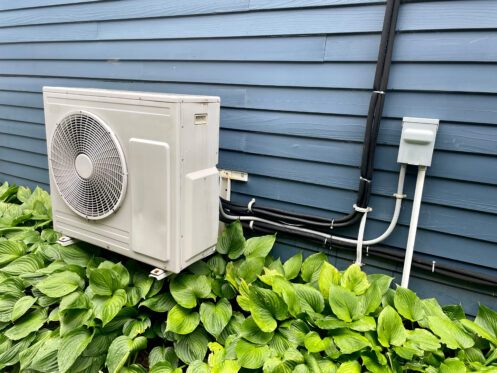
Ductless mini-split systems are excellent heating and cooling solutions for many New York homes, but they are not the right choice for every property. These systems offer incredible flexibility and energy efficiency without needing traditional ductwork, making them a popular option for older homes and modern additions alike. However, they also have specific limitations that Long Island homeowners should consider before investing.
The right choice depends on factors like your home’s layout, your family’s comfort goals, your existing HVAC equipment, and your budget. To help you decide, we explore the major advantages and disadvantages of mini-splits and outline the situations where they make the most sense for properties in Nassau and Suffolk counties.
What Is a Mini-Split System?
A mini-split, also known as a ductless heat pump, is a heating and cooling system that manages the temperature in individual rooms or zones. Unlike central HVAC systems that use a network of ducts to distribute conditioned air, a mini-split delivers it directly from an indoor unit.
The system has a few basic components:
- An outdoor condenser unit
- Indoor air-handling units
- A conduit connecting indoor and outdoor units
This design allows a single outdoor unit to connect to multiple indoor units, each with its own thermostat. This fundamental difference from traditional central air systems provides many key benefits and creates some drawbacks that we will discuss.
Advantage: High Energy Efficiency
One of the most significant reasons homeowners choose mini-splits is their energy efficiency. They use less energy than many traditional systems, which can lead to lower utility bills, a major concern for New York residents with rising energy costs. This efficiency comes from a few key design features.
First, because they are ductless, they avoid the energy losses associated with ductwork. In a central system, conditioned air can lose a significant amount of its heating or cooling power as it travels through ducts in unconditioned spaces like attics or basements. Mini-splits eliminate this problem.
They also use variable-speed compressors that adjust their output to precisely match the heating or cooling demand, rather than cycling on and off at full power. Finally, the ability to control each zone independently means you don’t have to waste energy conditioning empty rooms.
Who Benefits Most From the Efficiency Advantage?
This high efficiency is particularly beneficial for certain homeowners. If you have rooms that you rarely use, such as guest rooms or a formal dining room, you can simply turn off the indoor air handler in that zone. It’s also a great fit for anyone looking to reduce their carbon footprint and overall energy waste. For older Long Island homes built without ductwork, a ductless mini-split installation is often far more efficient than relying on window units or space heaters.
Advantage: Room-by-Room Temperature Control
The concept of zoning is a core benefit of mini-split systems. Each indoor air handler has its own remote control, allowing you to set different temperatures for different areas of your home. This level of personalized comfort is a game changer for many households.
Zoning is especially useful in multistory houses where heat naturally rises, making the second floor warmer in the summer, and for households whose members have different temperature preferences. You can keep a home office cool and comfortable during the day without freezing out the rest of the house or warm up a nursery without overheating the master bedroom. This focus on customized comfort is one of the biggest reasons homeowners choose a ductless AC solution.
Advantage: Excellent for Additions and Difficult-to-Cool Spaces
Mini-splits are often the perfect solution for spaces where other HVAC options fall short. Think about sunrooms that get too hot in the summer, converted garages, or finished basements that always feel damp and chilly. These areas are often not connected to a home’s existing ductwork.
Extending ductwork from a central system into a new home addition or a bonus room can be expensive, disruptive, and sometimes impractical. It can also unbalance the existing system, leading to poor performance throughout the house. A mini-split provides a self-contained, efficient solution for these problem areas without requiring a major renovation. This makes them ideal for older homes across Long Island that were never designed for central air conditioning.
Disadvantage: Indoor Units Are Visible
An honest discussion of mini-splits must include aesthetics. The indoor air handlers mount directly on a wall, typically high, or on the ceiling. While modern models are sleeker and more compact than older ones, they are still visible in living spaces.
For homeowners who prefer the seamless look of a central system where the vents are flush with the walls or floors, the appearance of a mini-split can be a significant drawback. A professional installer can help you consider placement options to minimize the visual impact.
Are There Alternatives to Wall-Mounted Units?
Yes, there are alternatives, although they may come with different installation requirements. Some manufacturers offer ceiling-mounted “cassette” units that sit flush with the ceiling or even concealed “slim duct” units that you can hide in a ceiling or soffit with just a small vent showing. The feasibility of these options depends on your home’s construction and your specific comfort needs.
Disadvantage: Higher Up-Front Cost in Some Situations
While mini-splits can save you money on energy bills over time, the initial installation cost is higher than that of some alternatives, especially when you need multiple indoor units to condition an entire house. The price of a multi-zone system can sometimes exceed that of replacing a standard central air conditioner.
Several factors influence the total cost of a mini-split system. The number of zones you need, the complexity of your home’s layout, any necessary electrical upgrades, and the specific equipment you choose all play a role. Because every installation is unique, the cost can vary significantly from one project to another. We understand this is a major investment, which is why we offer flexible financing on approved credit to make the system more affordable.
Disadvantage: They May Not Be Ideal for Every Whole-Home Application
Although a multi-zone mini-split system is perfectly capable of heating and cooling an entire home, it isn’t always the most practical or cost-effective whole-home solution. In some cases, a traditional central system may be a better fit for a homeowner’s needs and preferences.
For example, if your home already has a well-designed and properly maintained duct system, simply upgrading to a new high-efficiency central unit might be the best choice. Some homeowners also prefer the simplicity of having a single thermostat to control the entire house. For a very large home with an open floor plan, a central system might distribute air more evenly than multiple, smaller indoor units.
When Is a Mini-Split the Best Choice?
Mini-splits perform exceptionally well when addressing the problems they are designed to solve. They connect innovative technology to real comfort challenges faced by homeowners.
A mini-split is often the ideal choice in these situations:
- Homes without existing ductwork
- New room additions or home extensions
- Finished basements, attics, or garages
- Specific rooms that are always too hot or too cold
- Older or historic homes where preserving the structure is important
- Homes where family members want different temperatures (zone control)
- Home offices, studios, or other flex spaces
When Might Another HVAC Solution Be Better?
Providing a balanced perspective is important. While mini-splits are versatile, there are times when a different type of air conditioning system might be more suitable.
It may be worth considering an alternative if your situation includes:
- A home with a high-quality, well-maintained existing duct system
- A large, open-concept floor plan
- A whole-home project with existing central HVAC
- A strong preference for a completely concealed, invisible system
- A budget that requires a lower up-front cost
In these cases, a modern central AC installation might be the more logical and satisfying choice for your home.
Is a Mini-Split Right for Your New York Home?
Ductless mini-splits offer Long Island homeowners excellent energy efficiency, unparalleled flexibility, and precise room-by-room temperature control. However, their visible indoor units and potentially higher up-front cost mean they aren’t the perfect fit for every property or budget. The best decision comes from carefully evaluating your home’s layout, your existing HVAC system, your biggest comfort concerns, and your long-term goals.
Since 1975, the NATE-certified technicians at Cool Power LLC have helped homeowners in Nassau and Suffolk counties find the right comfort solutions.
If you’re considering a mini-split system for your Long Island home, contact Cool Power LLC today for a professional consultation to determine the right choice for your needs.